
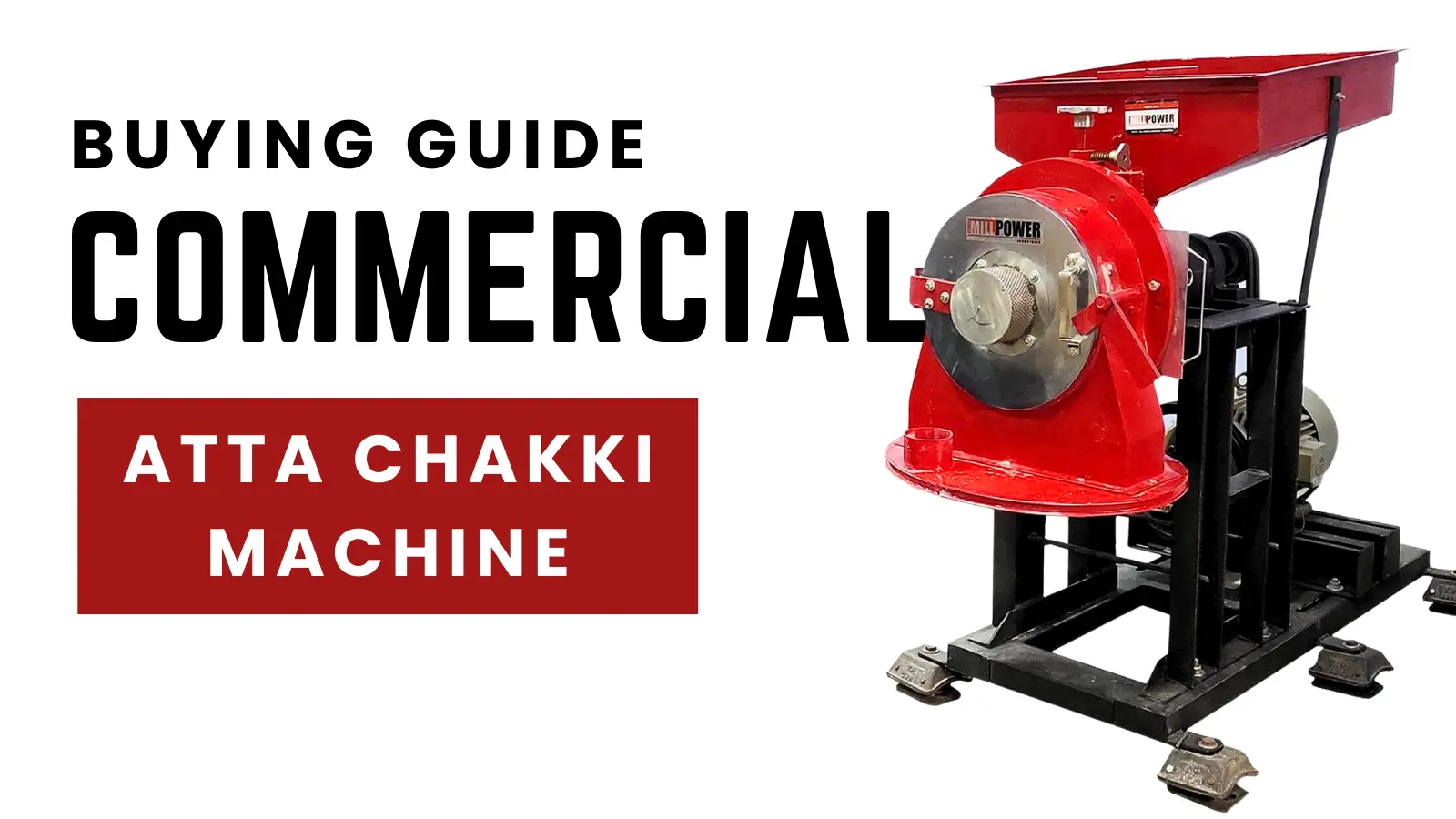
A complete buying guide for commercial atta chakki machines in India, covering 2–20 HP models, 20–200 kg/hr capacity, pricing factors, duty cycle, installation, and selection tips.
15 min Read
16/04/2026
Atta Chakki & Flour Mill
Choosing the right Commercial Atta Chakki Machine comes down to matching power to your daily output, flour fineness, and uptime needs. Capacity bands from 20 to 200 kg per hour are common in 2 to 20 HP models, but real throughput depends on wheat quality, moisture, and sieve mesh selection.
To choose a commercial atta chakki in India, match hourly flour demand with machine HP: 2–3 HP for 20–40 kg/hr, 5–10 HP for 40–140 kg/hr, and 15–20 HP for up to 200 kg/hr.
A commercial Atta Chakki is a powered flour grinding machine designed for continuous retail and small industrial use. It mills wheat and compatible grains to produce atta with repeatable fineness, hour after hour. Typical users include retail flour shops, central kitchens, and small milling units handling job work. This is commercial use only. Domestic units are built for intermittent home grinding, lighter duty and lower throughput, while commercial machines are engineered with heavier frames, high-efficiency motors, larger emery stones or impact chambers, robust bearings, and dust control hardware for cycles and smoother output.
In India, buyers see two broad families. Stone or emery disc chakkis for atta that gives traditional mouthfeel. Hammer or impact pulverizers for spices, besan, sattu, and multi-grain mixes. Many shops operate both for different products, which keeps queues moving and fineness consistent during peak hours.
Power in HP reflects how much work the machine can deliver under load. Output ranges from about 20 kg/hr on compact 2–3 HP setups to roughly 200 kg/hr on 20 HP commercial units, with mid-range machines in the 5–10 HP bracket commonly producing 50–140 kg/hr depending on sieve mesh, feed rate, and material. Flour fineness is controlled by stone gap or sieve selection plus feed consistency. Real throughput shifts with wheat hardness, moisture content, the mesh grade used, and how steadily grain enters the chamber. As a rule, finer flour needs more energy per kg and tends to reduce hourly output unless you step up HP, stone size, or cooling aspirators.
When comparing spec sheets, read motor type and RPM, stone size in inches, hopper volume, cyclone and blower configuration, and available sieve meshes. Listings that declare 80 kg/hr at 12 inch stone in 7.5 HP, or 100 kg/hr in 10 HP are common on Indian vendor pages and give a realistic sense of bands rather than fixed rates.
Higher HP supports higher throughput and helps hold fineness steady during long batches. A machine that handles 100 kg/hr at medium mesh may slow if pushed to a very fine sieve. If your shop promises fine atta for chapatis with soft texture or runs multi-grain mixes that grind tougher, aim one HP class higher. This reduces motor strain, vibration, and overheat risks while keeping the mesh target intact.
Shops often discover this the first festival week. Demand spikes, sieves are switched to finer mesh, and a 5 HP starts to feel rushed. Moving to 7.5–10 HP stabilizes both speed and fineness. As people say on the shop floor, “Fine flour needs time… and power.”
Continuous running depends on machine duty cycle and how well the feed is managed. Light-duty units can heat up, glaze stones, or dump fines into air if pushed beyond design. Heavier frames, bigger stones, and better bearings raise duty cycle so the machine runs cool longer. Hopper size and feed consistency matter. A steady elevator or manual feed that avoids clumps helps hold mesh uniformity and reduces rework. Adding a cyclone and proper aspiration keeps temperature and dust in check, which makes the flour cleaner and reduces operator fatigue.
A short shop-floor snapshot. An evening rush in Pune. You hear the hum of the stone discs, feel a faint warmth at the outlet, and see minimal dust because the cyclone is doing its job. That mix of sound, temperature, and clean counters signals the setup is right-sized for the load.
Here is a simple view of typical commercial ranges. Actual output varies by wheat, grain mix, mesh, and feeding method.
The tables and steps below help you quickly decide the right commercial atta chakki based on your business type, output requirement, and flour fineness.
Commercial atta chakki machines are selected based on business type and output requirement. For a small flour retail shop, a 2–3 HP machine producing around 20–40 kg per hour is suitable, especially where single-phase power is available and investment needs to stay low.
A standard atta chakki shop typically uses a 5 HP machine that delivers 40–80 kg per hour, offering a balanced combination of output and electricity consumption for daily retail operations.
For busy retail counters or cloud kitchens, a 7.5–10 HP machine is recommended, producing approximately 80–140 kg per hour. This range handles fine mesh grinding and peak-hour load more efficiently.
In case of job work or bulk grinding operations, a 15 HP machine is suitable, delivering around 120–180 kg per hour with stable continuous duty performance.
For a small production unit, a 20 HP commercial atta chakki can produce 160–200 kg per hour, supporting higher throughput with cyclone and dust control systems.
Capacity bands of 20–200 kg/hr are realistic across 2–20 HP machines. Expect higher outputs when running coarser mesh or dry, hard wheat. Expect lower outputs when pushing fine sieves or moist grain that needs extra passes.
Atta chakki output depends on several operating factors. Using a finer sieve mesh reduces output because finer flour requires more grinding time and energy. To maintain production levels while grinding fine flour, a higher HP machine is recommended.
Grinding moist wheat decreases output since wet grains increase resistance and reduce grinding efficiency. Properly drying wheat before grinding helps maintain consistent performance.
A higher HP motor increases output capacity and supports steady grinding, especially during continuous operations or when fine mesh is used.
Using cyclone cooling systems helps stabilize output by reducing machine heat during long working hours. This improves performance consistency.
Maintaining steady and uniform feeding of grain into the hopper improves grinding consistency and prevents output fluctuation. Avoiding clumps and irregular feeding helps maintain stable kg per hour performance.
Disc-type emery stone machines produce the classic chakki atta profile. They are preferred for wheat flour with traditional taste and soft chapati texture. Impact or hammer types are used for pulverizing spices, besan, sattu, and multi-grain mixes that benefit from high-speed impact and sieve grading. Many Indian manufacturers sell both configurations, and retailers often pair a disc mill for atta with a double chamber pulverizer for non-wheat products to balance speed and fineness across the day.
Choose stone when the brief is flavor, elasticity, and the familiar feel of chakki atta. Choose impact when the shop runs multiple non-atta items, needs faster cycle times on tougher materials, or wants a cyclone plus grader path to control particle size closely.
Retail flour shop. Priority is steady throughput, mesh consistency, low dust, and simple maintenance. A 5–10 HP range fits most counters, especially where the operator swaps mesh during the day. Cyclone and blower reduce dust and keep flour cooler.
Central kitchen. Kitchens serving canteens or cloud kitchens care about hygiene, quick switches between products, and load balancing. A 7.5–15 HP footprint with better aspiration, sieve options, and noise control works well for continuous shifts.
Small industrial. Job work units and mini plants often add elevators, graders, destoners, and storage tanks around 15–20 HP chakkis for higher daily tonnage and cleaner operation. Vendors list turnkey sets combining chakki, cyclone, airlock, blower, and cleaning trains to stabilize volume and fineness during long runs.
Use this practical checklist to sort the best commercial atta chakki machine for your shop and capacity plan.
Frames should be heavy, rigid, and vibration resistant. Motor brands with proper RPM, cooling, and energy efficiency help keep bills in check and output stable. Bearings need to be sized for load and sealed to resist dust. Reduced vibration shows up as predictable fineness and lower stone wear over months of use [2],[4].
Watch for signs during demo. Smooth sound at full load, no shaking at the stand, and a cool motor case after a long run are simple tells that the build is right-sized for your capacity plan.
Mesh flexibility drives your product range. Quick sieve changes and graded trays let operators hit fineness targets without delay. Cooling through cyclone aspiration reduces flour temperature, limits clumping, and helps hygiene. Dust collectors and airlocks keep counters clean and the air clear, which customers notice the moment they walk in.
Uptime is everything in a retail shop. Confirm the service network in your city, response time, and whether the vendor stocks routine spares. Warranty terms should spell coverage on motor, stones or chambers, and bearings. An annual maintenance contract pays for itself in preventive checks, belt alignment, lubrication, and sieve replacement planning.
There is no single “commercial atta chakki machine price.” Quotes move with HP, frame weight, stone or chamber type, cyclone and blower, grader or sifter add-ons, motor brand, and installation complexity. Public listings from Indian manufacturers show wide variation by configuration, city, and accessory stack. Use these as signals rather than fixed rates.
As of 2025, expect higher quotes for stainless contact parts, heavy frames, three phase motors, and turnkey mini plants with elevators and storage. Shipping, taxes, and on-site electrical work add to the final invoice in metro markets.
What pushes cost up. Bigger motors, larger stones, thicker frames, high grade bearings, SS304 contact parts, cyclone and blower, dust collectors, graders, elevators, control panels, and on-site installation. What keeps costs moderate. Simpler frames, mild steel contact paths, single cyclone, fewer accessories, and shop-led installation using local electricians.
Transport distance, site access, lift costs, local taxes and handling change the landed cost. Electrician work, panel requirements, and three phase feasibility vary by building and utility. Vendors with stronger service presence in Ahmedabad or Delhi may quote quicker lead times, which affects short-term revenue planning for a new shop.
Think beyond the quote. Electricity per hour depends on HP and load factor. Routine spares include belts, bearings, sieves, and stones or hammers. Downtime costs mount when mesh goes off target or service is slow. A simple ROI view. Monthly demand times selling margin minus electricity and consumables, then discount for downtime risk. The “best commercial atta chakki machine” is the one that protects fineness and uptime at your target capacity.
Rather than chase brand lists, evaluate the maker by what matters. Proven capacity at your mesh grades, motor and stone quality, dust control design, service coverage where you operate, and transparent warranty terms. Short demos or trial batches tell more than long brochures.
Manufacturers with decades of experience in commercial grinding machinery understand Indian wheat varieties, moisture variations, and continuous duty requirements better. Machines designed and tested for Indian retail conditions typically deliver more consistent flour quality, better uptime, and easier long-term maintenance.
Ask for GST details, warranty terms in writing, and whether a demo or trial batch is possible. Request references in your city and confirm after-sales capacity. If feasible, visit the factory to review frames, stones or chambers, and assembly quality. A short trial on your wheat stock is worth the trip.
Prefer food-grade contact parts such as SS304 where it fits your budget and cleaning routine. Check hygiene practices, safe material handling, and whether the cyclone and airlock keep dust away from the customer zone. Your shop’s reputation is linked to how clean and consistent the flour looks and feels.
Plan layout for smooth grain flow and safe operator movement. Leave space for hopper access, sieve changes, and cleaning. Wall the cyclone discharge away from the customer area. Line-of-sight to the counter helps you control queues while the mill runs.
Single phase is workable on compact 2–5 HP systems where the grid is stable and voltage is kept near nominal. Three phase is preferred above 5–7.5 HP for smoother torque, cooler motors, and better duty cycles. Good earthing, a stabilizer where voltage sags, and a clean panel reduce nuisance trips and protect bearings and belts.
Plan for airflow around the machine and a clear path for dust extraction. Cyclone and aspiration reduce fine particles, improve hygiene, and lower flour temperature. Rubber feet or a heavy stand tame vibration and noise. A quiet, clean shop is noticed by customers, and staff fatigue drops when dust is under control.
Keep operation simple and repeatable. Train staff on feed rates, sieve changes, and safety. Schedule cleaning and lubrication so the stones or hammers last longer and mesh targets stay intact. Fresh grain, dry storage, and pest control are basic but make a big difference in flour taste and color.
Store wheat off the floor in sealed bins. Keep moisture low to protect mesh consistency. Clean loading areas, avoid mixed lots that bring unknown moisture, and sanitize counters. Train staff to bag flour quickly and seal well so texture stays light and aroma stays fresh.
Commercial chakkis fit retail and small production where hourly bands up to about 200 kg are enough and mesh is managed at the machine. An Industrial Wheat Mill Machine or a small roller flour plant scales higher, adds cleaning and grading trains, and pushes daily tonnage with more automation. It needs more space and a stronger power backbone but suits multi-product operations and longer shifts.
Commercial machines keep costs manageable and can be paired for added capacity. Industrial plants carry higher upfront cost but reduce per kg labor with elevators, graders, and plan sifters. The decision hinges on daily demand, product range, and uptime expectations across seasons.
Clear signs. Daily demand consistently above 200 kg/hr. Multiple products needing rapid mesh changes and clean separation. Desire for automation in cleaning, grading, and bagging. If queues stretch during peak hours and you keep pushing the mesh finer, it is usually time to move up a tier.
Run a short, focused buying process. Share your load plan and fineness needs. Ask for demo or trial batch. Confirm service coverage and spares. Compare quotes on the same configuration to avoid apples-to-oranges surprises.
Send a clear RFQ with material, target capacity in kg/hr, fineness or mesh, available power, shop space, city, and required accessories such as cyclone, grader, and elevator. Request a demo on your wheat stock and ask for a bag sample to check feel and color.
Confirm response time, included parts, and service charges after the warranty window. Request a spares list with belts, sieves, bearings, stones or hammers, and cyclone seals. Training and documentation help operators keep quality steady and reduce calls during busy hours.
Selecting the right Commercial Atta Chakki Machine depends on matching HP, capacity, and flour fineness with your daily demand. Prioritize dust control, service support, and upgrade flexibility. A well-sized machine protects flour quality, reduces downtime, and supports business growth as demand increases.
If you run fine meshes or see seasonal spikes, step one size higher. That keeps flour quality steady and helps uptime during peak weeks.
Below are clear answers to the most common questions buyers ask before purchasing a commercial atta chakki machine in India.
A 7.5–10 HP emery stone unit with cyclone and easy sieve changes works well. It balances throughput around 80–140 kg/hr and keeps dust down for cleaner kitchens.
If you need 50–80 kg/hr at medium mesh, 5 HP is fine. For 80–100 kg/hr or consistently fine mesh, step to 7.5–10 HP to hold fineness and avoid overheating.
Consumption varies with mesh, moisture, and load. Public listings show hourly draws rising with HP. Expect higher watts per kg at finer meshes and during long continuous runs.
Yes. Stone chakkis handle wheat-led blends. For tougher grains or sattu and besan, add an impact pulverizer with cyclone and grader to keep particle size consistent.
Cyclone, blower, airlock, and graded sieves. Elevators help steady feed. Rubber feet or heavy stands cut vibration and noise in customer areas.
Daily cleaning, weekly lubrication, and regular sieve, belt, and bearing checks are essential. Monthly alignment and inspection of stones or hammers help maintain uniform flour fineness, reduce overheating, and extend machine life.
Prices vary due to transport distance, local taxes, installation costs, electrical work, and service availability. Metro cities may have higher installation and labor costs, while locations closer to manufacturing hubs often get faster delivery and lower logistics charges.
GST and warranty terms, demo or trial batch, references in your city, spares availability, and after-sales capacity. Factory visit adds confidence.
When hourly demand crosses about 200 kg, product lines expand, and you want automated cleaning and grading with long duty cycles.
Material type, target kg/hr, mesh or fineness, power supply, shop space, city, and accessories like cyclone, grader, or elevator. Request bag samples from a trial run.
A 5 HP commercial atta chakki is ideal for new shops, offering 40–80 kg/hr output with manageable power cost and upgrade flexibility.
Yes. Machines above 7.5 HP with proper cooling, cyclone, and heavy bearings are designed for long continuous duty cycles.
Yes. Finer mesh increases grinding resistance, which lowers kg/hr output unless higher HP or better cooling is used.
Three-phase is recommended above 5 HP for smoother torque, lower heat, and better motor life, though small units can run on single phase.
Most 5–10 HP setups need 80–120 sq ft including cyclone, hopper access, and operator movement space.
Pulverizer King
B 31 Arvind Estate, Nr. Star Hospital, Bapunagar, Ahmedabad Gujarat IN 380025
Copyright ©️ 2026 Pulverizer King